
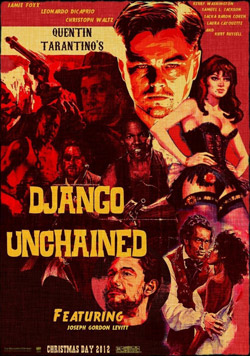
When I was a teenager growing up in South Central Los Angeles in the ’70s, there was a type of paperback novel you couldn’t find at B. Dalton or Martindale’s. Instead, you found these books on the spinner rack in drugstores and bus station newsstands, and even in grocery stores. They had titles like Eldorado Red, Trick Baby, and Death for Hire. This was crime fiction with black protagonists and antiheroes published by the L.A.-based, white-owned Holloway House whose specialty, in their words, was being “the world’s largest publisher of black experience paperbacks.”
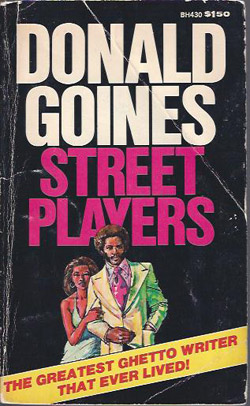
While in prison, Goines had been inspired to use the elements of his criminal life—as Chester Himes, creator of the Coffin Ed Johnson and Gravedigger Jones series of mystery novels before him—once he’d read Beck (aka Cavanaugh, aka Iceberg Slim). In Pimp, a fictionalized autobiography of his life, Beck told in cold, harrowing detail how to mesmerize a woman to put her out on the stroll, and how to beat her if she withheld your money. Nazel wrote various types of books for Holloway House, from a bio of crusading journalist Ida B. Wells, to horror (The Black Exorcist), to his Iceman series. The latter character being one Henry Highland West, a cat who was a cross between Iceberg and the Punisher. He ran a casino and legal brothel outside of Vegas called the Oasis and battled the mafia.
My friend, the writer Emory Holmes II, also a former Holloway House editor, had this to say in his affectionate obit in the L.A. Times when Nazel, a Vietnam vet, died too early several years ago at age 62. “Joseph could write a novel—some of them glorious, some of them god-awful, some under his own name, some under one of his dozen or so pseudonyms—in six weeks flat. And he did it while he was working full time as an (underpaid) editor, penning letters and writing news stories.”
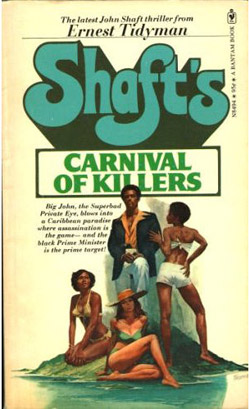
Angela Harpe in a series of Dark Angel books by James D. Lawrence was a female Shaft mixed with filmdom’s Cleopatra Jones. And the late Edgar-nominated Marc Olden wrote a series of action-adventure novels featuring Robert Sand, the Black Samurai. “He felt the warm blood under his bare feet as he stepped over the bodies and moved down the hallway. Other raiders would be here soon. But it didn’t matter. He was a Samurai, he would die fighting as a Samurai.”
There’s also the more recent advent of what’s been called Ghetto Lit. This has been an admittedly narrow segment of crime fiction, coming out of gangsta rap and usually about men and women blinging up, being players. For good and for ill, there’s been a plethora of books, also called Street Lit or Urban Fiction, that—while writers such as Terry McMillan pilloried them—fostered a readership. Titles such as Hood Rat, True to the Game, and Picture Me Rollin,’ have been devoured by a generation weaned on MTV Cribs and songs like “When Thugz Cry.”
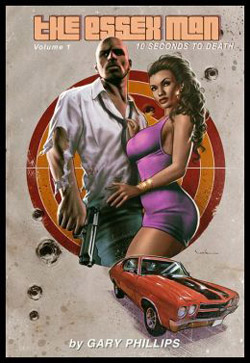
Can’t wait to write the second one…dig it.
This sweepstakes has ended. For current opportunities, check our Sweepstakes feature page.
To enter for a chance to win one of five e-copies of Essex Man: 10 Seconds to Death by Gary Phillips in your choice of .ePub or .mobi format, make sure you’re a registered member of the site, and then simply leave a comment below.
TIP: Since only comments from registered users will be tabulated, if your user name appears in red above your comment—STOP—go log in, then try commenting again. If your user name appears in black above your comment, You’re In!
NO PURCHASE NECESSARY TO ENTER OR WIN. A purchase does not improve your chances of winning. Sweepstakes open to legal residents of fifty (50) United States and the District of Columbia, who are 18 or older. To enter, fill out entry at https://www.criminalelement.com/blogs/2013/03/black-pulp-fictions-gary-phillips-nelson-george-donald-goines-chester-himes-robert-beck-joe-nazel beginning at 12:00 p.m. Eastern Time (ET) March 14, 2013. Sweepstakes ends at 11:59 a.m. ET on March 21, 2013 (the “Promotion Period”). Void outside of the 50 US and DC and where prohibited by law. Please see full details and official rules at https://www.criminalelement.com/page/official-rules-essex-man-comments-contest. Sponsor: Macmillan, 175 Fifth Ave., New York, NY 10010
In addition to the The Essex Man, Gary Phillips’s latest work includes a short story in The Heroin Chronicles and he’s writing the Indiegogo webseries project, Midnight Mover.
I remember seeing these in bookstores!
Gary Phillips is a badass!
Sure you’re right.
GP: the People’s historian.
GP: the People’s historian
nice post
Tals about bringing back memories! Reading Himes or Tidyman after homework or when riding BART after school were my treats back in the day.
I am a player!-Yes!
Yes to some entertainment!
I know very little about these books. I’ve heard of Shaft, of course, but I’d love the opportunity to experience something very different. The Essex Man strikes me as a fascinating read. Thanks for the giveaway!
I’m curi0us whether there are any books by female African-American writers in this genre.
Looks interesting, count me in
looks fun
Looks interesting & very retro.
This looks like a fun read.
looks like a cool book!
Good stuff but not pulp!
Pulps were magazines, not paperback books.
Pulp was not a genre (indeed, had genres: mystery/crime, horror, fantasy, science fiction, aviaton, war, adventure, vigilantes), but a delivery system. Paperbacks like the ones discussed above helped kill the pulps! It’s not pulp unless it was in a pulp magazine.
It’s really quite insulting to call these books “pulp” when pulp authors like Walter Gibson wrote TWO novels a month! For decades!
Hardboiled paperbacks like this already had a name, “potboilers.” There’s no reason to designate crime novels as “pulp” when Western & romance pulps were more popular and longer lived! Walter Gibson’s character The Shadow (2 a month!) had over 300 issues. The Phantom Detective made it into the early ’50s.
Hardboiled crime fiction, then, is a distant 3rd in pulp after Westerns, romanance and masked vigilantes. That stuff has more of a claim to being the poster child for pulp.
[url=http://www.criminalelement.com/community/users/Yupbucket]Yupbucket[/url] ” & very retro.”
Oh, come on. That’s a meaningless word; they came out in the ’70s.
I respectfully disagree with you loveablekook, but many modern day writers and readers use pulp to mean not only the magazine writing from the early 20th century, with authors such as Robert E. Howard, Raymond Chandler and Gibson but also the paperback writers of the mid 20th century such as Mickey Spillane, Himes and Tidyman. The paperbacks of the era were also the time that saw the reprints of Howard, EdgaRice Burroughs, H P. Lovecraft and other earlier pulp writers.
Among the writers mentioned by Phillips in the article above, Chester Himes was directly infuenced by his early reading of Black Mask magazine, and the pulp of the 30’s morphed into the pulp of the 50’s via the paperbacks.
Can’t wait to see what happens to the dastardly villain in the Ayn Rand mode (hope it involves pheromones….)