
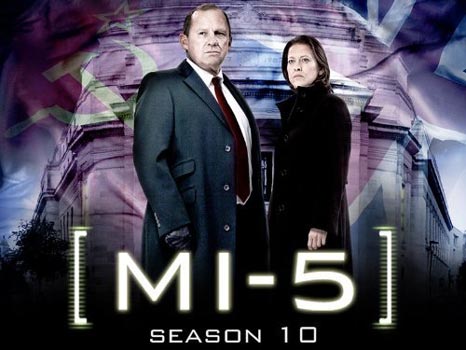
It’s been a while since I saw the very last episode of MI-5 and it’s taken me this long to come to terms with it. Who am I kidding? I haven’t come to terms! This is a rant!
I began MI-5 earlier this year hoping it would be a pleasant procedural I could watch in the background as I worked and waited for Richard Armitage to arrive. I did not expect to get hooked season 1 and then proceed to gorge myself (dragging my significant other along with me into the mire) on the next many seasons. All 10 seasons in a mere couple of months.
I became obsessed, long before the anticipated Lucas North came onto the scene. My love for the characters was a slow burn and then suddenly they all mattered so much. I’m not sure which episode started that; probably when Tom started questioning things, or when Ruth arrived—
Yeah, who am I kidding. Ruth. It all comes down to Ruth.
She’s the type of character that as an actress I’d love to be cast into; the quirky, odd, dresses a bit different, quietly pining heroine type who secretly holds up the entire operation. The entire series. The unassuming, charming, unexpectedly lovely, unabashedly genius character that made me care about everyone because I so keenly cared about her. Because of Ruth, I could see Harry, the true Harry, the best Harry, the awesomeness that is Harry—and I grew to love him too.
So, as you can imagine, when Ruth left for the first time, I was beside myself. You’d think someone real in my life had died. (This is the problem with actresses and authors, since I’m both, I’ve a disturbingly tenuous grip on reality and fictional characters ARE REAL.)
I knew characters came and went, Tom taught us that right off. I grieved the deaths along the way and prepared myself for more. I studiously avoided any spoilers and refused to ask my friends who had seen the seasons ahead of me anything. Anything except one yearning question (demand): “Tell me Ruth comes back?!”
Much like the show’s slow burn, for me the axis upon which the show turned had become Ruth and Harry. So maybe I’m a hopeless romantic. These two fit my favorite romance trope: the brilliant career individuals who haven’t made time for love or meaningful connections but quietly pine for one another. I mean, no one can resist two amazing characters being stubborn and perfect for each other and ridiculous and OH MY GOD JUST HOLD HER FOR GOD’S SAKE . . . It’s so delicious.
And I’d like to think Ruth came back because the show needed that heart, that ache, that waiting-the-whole-episode yearning just to see Ruth touch Harry’s hand. *swoon* It was so Victorian and chaste and maddening and wonderful. As Harry lay back on the shrink’s couch, alluding that something—someone—was missing, I of course shout at the television that he just needs Ruth. *Expletive* It was so classic.
Then the triumphant, heart–wrenching, epic return of Ruth. Both of them held hostage, literally and figuratively. Harry asks the worst thing possible—he really did have wonderfully terrible timing—and yet the thing that was on all of our minds: “Did you love him?” Her awkward denial had me cheering amidst her terrible conflict so beautifully acted. It was horrible and amazing. Kind of like the marriage proposal.
I loved how the show did and didn’t do what we wanted along the way, you weren’t really sure which way it would go, what victories or losses. And yet as we approached season 10, a pit of dread grew in my stomach. You can do anything, MI-5. Anything except kill her. Not her.
As the unrequited romance between Harry and Ruth became more and more of a centerpiece of the final season I rejoiced at its centrality and yet my fear blossomed. Because I was afraid that they just wouldn’t allow us what we (well, at least I) wanted. And I resented that.
Because in the end, this is an exaggerated view of what MI-5 would actually be like. Harry and Ruth would mostly be office workers. They were terrifically clever of course, I loved it when they were in the field, and they were kick-ass when they had to be (dude, when Harry choked a man with his tie, I freaked out with the best of them), but those were extraordinary days. Essentially they were genius office workers.
There’s no reason they couldn’t have had a house in Suffolk.
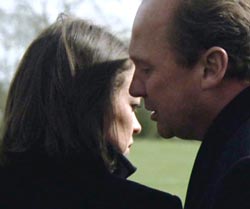
There’s no reason Harry and Ruth couldn’t have been together except the writers or producers or whoever didn’t want anyone to have a happy ending. Oh, wait. Zoe had a happy ending. But she was young and blonde. No happy endings for older people. No happy ending for the two characters that are the only reason I’m watching the show because Lucas North jumped off a ledge and frankly I didn’t care about anything else, I just WANTED RUTH TO SAY YES FOR THE LOVE OF GOD and I wanted that bloody house in Suffolk! *weeping* *flailing*
Please no one tell me this is an American versus British thing. I’m the biggest Anglophile of them all. I was in love with Doctor Who from the age of 7, way before it was “cool”, ok. I’ve spent a lot of time across the pond and the BBC has wrought the most gorgeous happy endings of all time. (Hello, North and South, the whole reason MI-5 was ever on my radar, Mr. Armitage).
It wasn’t more “realistic” and less romanticized to kill Ruth. Instead of love it’s violence that’s romanticized. I’m all for Shakespearean tragedy, but only if the deaths are truly earned. Most of the deaths in MI-5 were earned one way or another. But the final message was all about a patriarch, his sacrifices, the martyrs around him and his solitary pain. But “Harry’s lonely pain” as emblematic send-off is not enough to really do the many rich colors and fascinating aspects of the show justice. Not for me. You should have retired, Harry, and Ruth should have damn well said yes.
My mind has rewritten that final episode, and that lovely house in Suffolk has two quiet, smiling, genius people sitting in it as they age gracefully, listening to Mozart, a world of secrecy all behind them; two of my favorite television characters of all time having earned their much deserved peace.
Leanna Renee Hieber is an actress and the award-winning, nationally best-selling author of Gothic Victorian Fantasy novels for adults and teens such as Darker Still: A Novel of Magic Most Foul. Her passion for this particular subject matter has compelled her to put echoes of these characters into a new series, in which the ending is exactly how she wants it. Visit her on Twitter or at her website.
Read all posts by Leanna Renee Hieber for Criminal Element.
I haven’t seen all of episodes, only up to the time that Ruth had to leave. It was getting so that they had killed off all of the quirky characters and we were left with the beautiful people. You make me want to go back and watch the rest of the series now.
When I first watched the series, I watched only a few episodes past when Tom left. I knew that Matthew wouldn’t be back, and he was the main reason I even bothered in the first place. This time, I figured, hey, the show’s over, I might as well just go for broke, so I started again at season one and just kept on going. I never would have discovered Rupert Penry-Jones or Richard Armitage if I hadn’t, and whoo, baby, are they worth discovering! I loved the Harry/Ruth dynamic, though in earlier seasons I saw it more as a very complex interdependence than as a romance. I thought it was a bit unrealistic for Ruth to be so happy with her life after MI-5, and cruel of the show to rip it away from her even if I didn’t think it was really *Ruth*. And they just kept right on ripping. The dialogue-free scene where Harry goes to Wesley’s game and Wesley just knows – that will be etched in my memory forever. Then I grow to love Lucas and he’s gone. Then the last season with Harry and Sasha – that Tom Weston-Jones is one to look out for! Then the insult of all insults. Killing Ruth was just ridiculously and unnecessarily cruel, both to us and to Harry. I understood Harry’s struggle, though. Listening to the phone and finally, just putting the mask and costume back on and becoming that Harry again because it’s comfortable, and without Ruth, he doesn’t know how to be anything else.
Loved seeing Tom in the final moments, too.
I got the link here from a posting on Twitter and mirroring many of the comments there, I’d just like to say, you describe exactly what so many felt (and still feel) in a very eloquent way. Spooks/MI5 was an amazing show but what made it hang together, particularly at the end, was Harry and Ruth and the end that was chosen felt like a slap in the face to so many!
Great post!
It does make me wonder what they would do with the current political climate. On the other hand, they pushed the envelope on Iran and Syria long before the current mess.
I always watched ‘Spooks’ (sorry, but I’m British) because it was a drama about the lives and work of intelligence officers, and enjoyed it as such. And I would have enjoyed it just as much – possibly more – without Harry-And-Ruth. And why Ruth, of all the characters in 10 years of ‘Spooks’ should have been given a happy ending and it’s considered an ‘insult’ to viewers that she wasn’t is beyond me.
Especially since, and I whisper this, she wasn’t actually real …
Spy: Yes- it was a drama about the lives and work of intelligence officers and I enjoyed it as such. That is exactly why I loathed later series because it ceased to be about this. 10.6 was the final straw when the writers tried to make Harry the matyr bound up in a cycle of violence and living only for the job, making the show about being a futile cog in the machine rather than a range of individuals with aspirations and desires.
Ruth could have had an unhappy ending. I was prepared for one. My problem with Ruth dying is that it was taped onto the end of 10.6 for a cheap moment of drama rather than any apparent thematic or narrative reason. I am no published author like Leanna, but I do write. In my opinion, the series finale of Spooks was terrible writing. It didn’t fit the initial theme of Spooks which was that life in the service was challenging, limiting and complex, but not impossible to negotiate despite the trauma.It turned the show into the Harry Show and to do this had to eliminate anyone who got in the way of making Harry look less than perfect. Exit Ruth.
I’m with Leanne. 10.6 wasn’t more realistic. It was a tired repeat of the white angsty man in drama trope which I am sick to death of. It argued that death and unhappiness is all that can be expected from Thames House unless you are that protected white hero. The show expected me to revel in the nihilism because apparently nihilism and a troubled but always upright hero were what Spooks was meant to be about.
Well it wasn’t for me. Lest we forget the days of Tom, Danny and Zoe; days when the show was about multiple characters, their lives, and their work. Ruth and Harry were the last of the fleshed out guard (And I’m also with Leanne on only caring about Lucas and Ruth by s9, though my rant about Lucas’ storyarc would need a whole new post of its own) so it seems rather cheap of the producers and writers to thumb their noses at a large number of fans in making a loud but fleeting bang predicated on flash, rather than a finale of substance.