
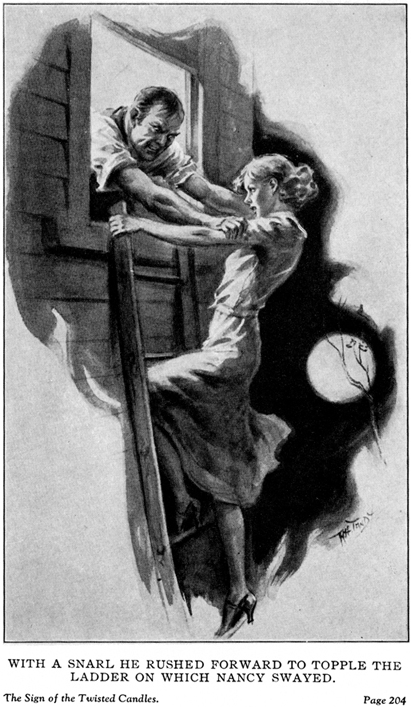
 I’m a reader because of Nancy Drew. Back in the Dark Ages when young adult fiction consisted of Sweet Valley High and Judy Blume, it was Nancy who got me reading. I liked the puzzle. I liked following the story and trying to unravel the mystery right along with Nancy, even if she did get herself tied up and thrown into car trunks every other book. So needless to say, once Nancy and I parted ways, it was the rows upon rows of mystery novels in my local public library that I moved on to. But perhaps, by then, I’d become accustomed to reading violence against women in my crime fiction? Well, maybe and maybe not.
A lot has been made of the fact that so many mystery/suspense novels feature violence against women (for instance, this Muderati post from Tess Gerritsen, a follow-up to views from Louise Ure and Val McDermid). If comments online are anything to go by, many readers are extremely bothered by this. It’s never bothered me. In fact, it’s never bothered me to the point that I’ve never really thought about it. After all, it was Mary Higgins Clark who wrote some of the first “adult” books I read as a teenager, and she’s the Grand Dame “women in peril” plots!
Does this make me a terrible feminist? No. And I’ll tell you why.
Genre fiction works so well because it hinges on what I call “The Here And Now.” Some of the first references I read to 9/11, the war on terror etc. —all were in genre fiction books. Violence against women, whether we want to acknowledge it or not, does exist in the real world. As a woman, there are just certain things I don’t do. Oh, like walk down a deserted street late at night by myself. But certainly, even with precautions, violence happens. It just does.
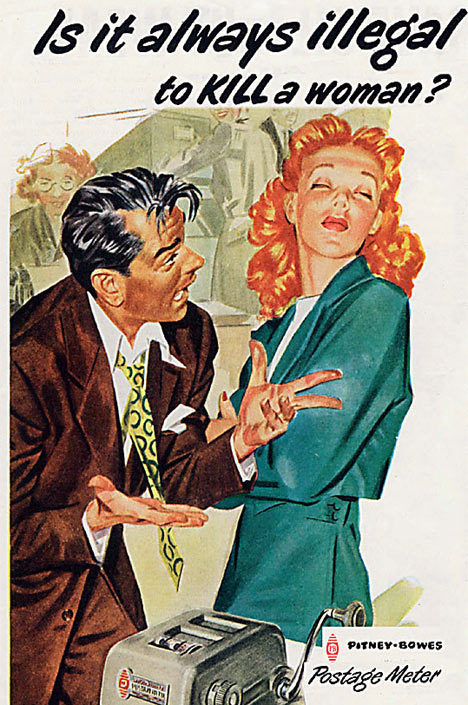 What makes women-in-jeopardy novels so compelling, is that while there may be one or more poor dead woman moving the plot forward, a lot of times there’s another woman on the page trying to solve the mystery and bring the perpetrator(s) to justice. I look back on all the mystery/suspense authors who have written books I’ve enjoyed over the years—Tess Gerritsen, Patricia Cornwell, Mary Higgins Clark, Sue Grafton, Marcia Muller—and in all their cases, while “bad things happen to women,” it’s a strong female lead who is cracking the case.
Yes, women are victims in these books, but they are also the heroines. They’re smart, resourceful. They’re fighting crime and bringing justice to those women who met a violent end. Is violence against women still troubling in the fictional as well as the real world? Yes. Should everyone be forced to read these books? No. But to dismiss them outright just because bad stuff happens to women, is not looking at the bigger picture. The bigger picture of why these books are popular. And I, for one, am not willing to concede that I have deep-seated, self-loathing, misogynistic tendencies.
Can women be the losers in these stories? Certainly. But they also can be the winners, and that’s something that shouldn’t be overlooked.
Wendy Crutcher, Fighting For Truth, Justice and the Right to Read What You Want
I started with Nancy, too! My Mom’s old editions from the 40s, which I still have, and then every title from the library. I collect them, too. And once in a while, when I need something soothing, I re-read them — reading one usually leads to two or three others. There’s something nice about watching girls solve mysteries and help people who are victimized, even (especially) girls in quaint fashions in a society that doesn’t expect them to be much than ornamental. Sure, they sometimes get into situations where they have to be rescued by the men in their lives, but that doesn’t stop them from getting right back out there. I would never call those books great literature, but they will always have their own shelf in my house, right underneath my Oz books.
As a reader, I have a fairly low tolerance for violence of any kind, especially against women and MOST especially against children. Graphic violence, or long scenes of it, are particularly hard for me to read. I have stopped reading some authors’ work because I don’t enjoy the level of violence, even with the payoff of bringing the perpetrator to justice. Other books get read in small increments, alternating with something funny or sweet. But I would never suggest that those books shouldn’t be published, or read by those who enjoy them. As you say, violence against women is real, and genre fiction depicts it as both real and wrong. I applaud that.
I was a reader of the Hardy Boys and Trixie Belden. It might have been because my sister read Nancy Drew so I wanted to read something different.
@SonomaLass – When we’re talking fiction – violence is a lot like sex. Too much, not enough, whatever – every reader’s barometer is going to be different. Everyone’s threshold is different, and being grown-ups, it’s our job to recognize that – and make the decision to not read something that we suspect is “all wrong for us – personally.” Nothing wrong with that IMHO.
What tends to get on my last good nerve are blanket statements. Those readers who don’t personally “like” something and therefore deem it “wrong.” For everybody. Uh, no. Just no.
@VictoriaJanssen – Seriously, these young whipper-snappers today don’t realize how good they’ve got it when it comes to the sheer variety in the YA market now.
I never discovered Trixie, and the Hardy Boys went through a reboot right around the time Nancy did (I read the mmpb Nancy Drew Files series!) – but I just never could make myself pick one up. My heroine-centric tendencies obviously starting to form during my tween years 🙂
I never read Nancy Drew or the Hardy Boys. Just Judy Blume (don’t judge me) I just wasn’t into mysteries. That came later in life.
I’ve concluded that my tolerance level for violence in fiction is just higher than others. It just doesn’t bother me. I try to avoid reading books that feature violence against children. Otherwise… Some people have a way of stating opinions as if it’s “truth” and that’s what gets my shackles up. You made some valid points in this ongoing debate relating to how women are depicted in crime fiction. Women are victims (as well as men, children, elderly folk) and also women are apart of law enforcement bringing these criminals to justice.
I have problems — in theory — with the fetishism of lethal violence against women. The TV show Criminal Minds is particularly egregious about this. But while I boycotted the show for a long time, I ran out of police procedurals…and succumbed.
But when it comes to a mystery novel, it’s a closer call. Sometimes the victim is just a victim. Sometimes a victim is shorthand for a lot of anti-feminist sentiment.
I read all the Nancy Drews as a child — the most subversive element was, to me, the rather obviously lesbian relationship between George and Bess. You go, [s]girls![/s] ladies!
I read Trixie Belden and preferred the Hardy Boys to Nancy but read them both. Also by the same syndicate was The Dana Girls. And I read Cherry Ames, mostly nursing but solved some crimes. 🙂 There were also the other usual suspects in kid mysteries: Encyclopedia Brown and the Alfred Hitchcock kids. But I also started secretly reading my mom’s gothic romances in the 5th grade. I didn’t understand the physical down and dirty stuff but loved the romance angle. I read more crime fiction now than romance but that genre is picking up for me as I find good romance authors through Wendy and the Bitches. Sounds like a band, doesn’t it. 🙂
Nancy Drew was my drug of choice as a child. I tried to introduce my kids to her, but the technological and sociatal changes made it hard for the kids to understand. When you have to stop to explain everything, it takes a little something away from the story. I do greive that my kids will most likely never read the wonderful tales that helped me survive elementary school.
I’ve never really thought about the books I read being filled with violence against women for a few reasons. 1) In general I actively read/support women writers. I read books mainly written my men throughout grades 1-12 and college because they were required. Now I read books written by women who can give a unique perspective on their take of feminity. These women usually write strong women actively searching for the killer. The authors are also often equal opportunity killers. They may tell the gruesome details of the woman being killed, but there are usually men being beaten, robbed or killed too.
On a side note, Madgalen, I never once thought Bess and George had a lesbian relationship. Didn’t they both get boyfriends at different times?
@Scooper Have you seen Barrie Summy’s I SO Don’t tween/teen mysteries? They’re entirely modern and good, and genuine for the age ranges represented as Sherry grows, with her now-departed cop mom as an advising spirit.
I adored all the Nancy Drews, dabbled in Hardy Boys, but my grandmother gave me a bunch of Trixie Beldens, plus those career-girl mysteries like Cherry Ames (student nurse, traveling nurse, head nurse…) and Beverly Gray, reporter. There was a flight attendant, too, whose name I can’t recall now. I think those mature, organized, and adventurous girl-detectives did worm their way into my DNA somewhat, such that I’ve never read crimes against women (which is numerically dominant in fact, as well as in fiction) as overbalancing the essential search for truth about and justice for these victims.
And though I do find some writers/styles have turned the exposition of mass quantities of extreme violence into its own kind of splatter-sport–rather divorced from the more real effects upon bodies, onlookers, communities–I think of those as their own subgenre almost.
I love @WendyCrutcher’s sig line. Love what you read and read what you love!
@Keishon – Our thoughts on this matter are strikingly similar. I will say that I can think of two suspense novels in recent memory that “bothered” me – but not enough that I stopped reading the book or the author(s). In one case it was a Bad Things Happen To Kids book – and I honestly think a big reason why it “bothered” me as much as it did was because I listened to it on audio. Books just hit me a different way in that format.
@Magdalen – When a visual element is added to it, that’s a different ball of wax for me. I can read about some pretty gruesome stuff – but watching it? Yeah, no thanks. That was one of the reasons I loved the original Law & Order. They were equal opportunity when it came to their victims!
@PK the Bookeemonster – That sounds way cooler than Josie And The Pussycats!
@Scooper – And I think that’s why I actively read a lot of female crime writers as well. They’ll make women victims, but there’s also a “strong” woman propelling the story forward, bringing the Poor Dead Woman’s killer to justice. Re: Nancy Drew – they keep rebooting her for new generations. You might want to look at some of the “newer” editions. I’m not sure what’s available now – but I know they were doing some graphic novels in recent memory….
@clare2e – That’s an excellent way to put it. For me, in the long run, the crime against the female victim does not overpower the search for truth and justice. Ultimately, that’s what the genre gives me. It reinforces the belief system of right vs. wrong. That the bad guys will get punished, and will meet justice. Naturally we all know that doesn’t always happen in real life – but it’s what makes the mystery/suspense genre so comforting….in it’s way.
I started with Nancy Drew too! I relished those mysteries and spent one whole summer at the library with friends reading Nancy. When I was pregnant with my second child and had such bad morning sickness for so long that they hospitalized me for a week, the Nancy Drew books were what I clung to when I was all better and released. There is something about them that is so comforting and entertaining and exciting. Nancy may have been tied up and tossed in the trunk fairly often but she never succumbed to feeling like a victim. She may have been scared and anxious at first, but she was always confident and proceeded like she had some measure of control, and that’s what I liked. I like to see the female lead in the story have the attitude that even if bad things happen to her, she is still in control of her mind and her abilities; she can still control her life through these things.
Nancy Drew fan here, too. I’ll come at this from a little different angle:
[quote](especially) girls in quaint fashions in a society that doesn’t expect them to be much than ornamental.
[/quote]
I liked the fact that Nancy was pretty much left to her own devices most of the time. She had a car, she had nice clothes, she had money, and she had total independence–and she was still a teenager!
That was the fantasy for me. It wasn’t about the mystery, wasn’t about violence, wasn’t about the boyfriend, wasn’t about anything but for me to vicariously escape into the world of a girl who had what I knew I would never have: enough resources to get something real accomplished.
BTW, I stopped reading Patricia Cornwell when it became obvious she was enjoying the graphic violence a little (lot) too much.
Wow, books were what saved me in elementary school–Nancy Drew, Trixie Beldon, Hardy Boys, Cherry Ames, Sue Barton, all the career girl books plus many other series that I dabbled in, including the Meadowlark Girls and the Bobbsey Twins. I was a kid/teen way before Judy Blume and Sweet Valley High. I never thought that women were the victims, because women/teens were always the heroines! I am with so many of you in not reading those mysteries with a lot of egregious violence. It didn’t bother me until two co-workers were murdered –each by their boyfriend/husband–within 6 months of each other. It took years before I could read any mystery. I turned to romance for solace in those years. Thank heaven for books of all kinds! And I never apologize for my reading!
@MiraMystery @Moriah Jovan That self-reliance and freedom was always what I admired, too.
@Jill What a thing to experience- yikes! But you reminded me of the Meadowlark Girls I’d forgotten : ) never apologize. flash your covers!
Thnaks for Shaering it