
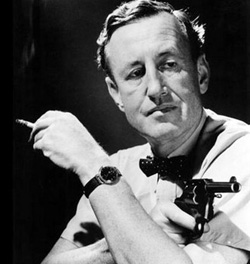
Writers are natural people-watchers. They train themselves to be accurate observers. To survive the wrath of their loved ones, they learn how to disguise their truths and communicate information with subtlety. Often in love with language, many are also linguists, crossword-solvers, code-breakers. They understand nuance, plot and sub-plot.
The convergence, here, of the language of storytelling and the language of spying is no accident; the imagination to devise and unravel schemes is essential to both professions. One of the earliest writer-spies, 16th century playwright Anthony Munday, was described in a list of contemporary writers as ‘our best plotter’. Munday was one of several Elizabethan writers recruited for the fledgling intelligence service set up to infiltrate Catholic conspiracies aimed at assassinating England’s Queen Elizabeth I.
Thomas Watson, the poet who wrote the first English madrigals, was another. Watson travelled for seven and a half years through continental Europe, apparently infiltrating the Jesuit seminary at Douai, and later carrying government letters from the Paris embassy. Back in England, Watson testified in the court case of a woman who believed she was the King of Spain’s daughter: a dangerous claim when the Spanish king, widower of Elizabeth I’s half-sister Mary, wished to restore himself as ruler of a Catholic England. Subsequently, Watson became tutor to the children of Sir William Cornwallis, a prominent Catholic who had been placed under government surveillance. The assignment was to lead directly to the graveyard: Cornwallis had Watson thrown in prison for tricking his daughter into a marriage contract, and within weeks, the thirty-nine-year-old poet was dead. Whether Cornwallis knew of Watson’s dual role in his household is unknown.
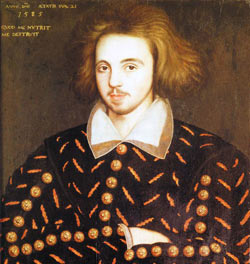
While Marlowe was wowing London audiences with plays like Doctor Faustus, he was also working as a government agent. When accused of trying to defect to the Jesuit seminary at Rheims, government ministers came to his defense, testifying he had ‘done Her Majesty good service touching the benefit of his country’. Five years on, Marlowe was betrayed in the Spanish-controlled Netherlands by a Catholic double-agent, a man he parodied as Barrabas in his play The Jew of Malta. The basis for his arrest was counterfeiting, but it didn’t lead directly to prison, suggesting a government-sponsored attempt to infiltrate the assassination plot of (Catholic convert and traitor) Sir William Stanley: Marlowe was ‘following the money’. Spying, however, was ultimately the playwright’s downfall. The two witnesses to the likely concocted ‘brawl’—most scholars think the inquest was a cover-up—were also intelligencers. Marlowe left behind a body of work stamped with traces of his time in the Queen’s service.
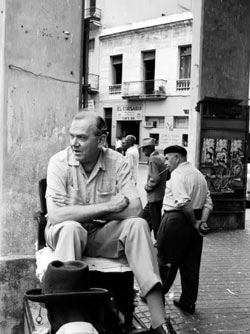
Ian Fleming was a journalist for Reuters in the 1930s and had begun writing stories, but it wasn’t until he became a spy that he found the material that would make him a successful novelist. He joined naval intelligence as a personal assistant and was quickly promoted to Commander, liaising with the prototype CIA before Pearl Harbor, and overseeing operation Goldeneye, a plan to maintain intelligence if the Germans overran Spain. After the war he spoke of writing spy thrillers, but returned to journalism. It wasn’t until 1952 that he wrote Casino Royale, spawning the still-popular phenomenon of James Bond.
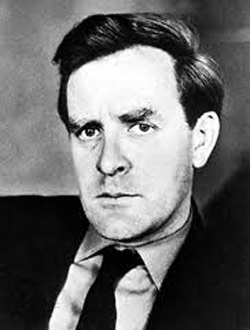
The majority of writers aren’t spies. The majority of spies aren’t writers. Nevertheless writers and spies share affinities and skills. Both gather and communicate sensitive material. Both spend time pretending to be someone they’re not. Both are prone to secrecy about their work. And writers and spies share this important secret in particular: though their professions have a public face of glamour and excitement, much of the work is rather routine.
Keep this to yourself, obviously. But on the whole, writing and spying are desk jobs.
This sweepstakes has ended. Check out our Sweepstakes feature page for current opportunities.
To enter for a chance to win one of three copies of The Marlowe Papers by Ros Barber, make sure you’re a registered member of the site, sign in, and then simply leave a comment below.
TIP: Since only comments from registered users will be tabulated, if your user name appears in red above your comment—STOP—go log in, then try commenting again. If your user name appears in black above your comment, You’re In!
NO PURCHASE NECESSARY TO ENTER OR WIN. A purchase does not improve your chances of winning. Sweepstakes open to legal residents of fifty (50) United States and the District of Columbia, who are 18 or older. To enter, fill out entry at https://www.criminalelement.com/blogs/2013/02/literary-intelligence-writers-as-spies-ros-barber beginning at 9:30 a.m. Eastern Time (ET) February 1, 2013. Sweepstakes ends at 9:29 a.m. ET on February 8, 2013 (the “Promotion Period”). Void outside of the 50 US and DC and where prohibited by law. Please see full details and official rules at https://www.criminalelement.com/page/official-rules-marlowe-papers-comments-contest. Sponsor: Macmillan, 175 Fifth Ave., New York, NY 10010
Ros Barber was born in Washington, D.C., and raised in England. She is the author of three poetry collections and her poetry has appeared in Poetry Review, London Magazine, and The Guardian among many other publications. Ros has a Ph.D. in Marlowe studies and has taught writing at The University of Sussex for more than a decade. In 2011, she was awarded the prestigious Hoffman Prize for The Marlowe Papers. She lives in Brighton, England.
Looking forward to this one…
I always find John Buchanan’s interrelationship with spying facscinating. Write some stories which pretty much led to the start of MI5 and MI6 and then work with them during WWI
fascinating post
I think I really need to read some John Le Carre
Fascinating topic.
looks like a good book.
I’m in – looks like a fantastic read. Thanks for offering this.
lets have alook.
pick me! I’m number 38 on the wait list at the library…that’s much toolong to wait
I would love to win this!
Wow, this looks like a great read. Thanks for the giveaway!
I LOVE spy stories. Looking forward to this one.
What a read – vicarious joy.
This looks really good would love to read!
Sounds absolutely fascinating!
This article was very interesting. I did not know about the correlation between spies and writers.
I will definitly be looking up some of the authors mentioned.
Looks very interesting. I look forward to reading this.
Looks very interesting. I look forward to reading this.
An interesting concept..writers as spies. Would love to read this .
What an interesting article! Thanks for sharing it here.
Wouldn’t it be something if all writers were spies? Since my son is a new writer I guess I better wonder about that one.
Would love to read.
Love it!
Wow, had no idea!
What an interesting article – thank you so much!!
very interesting
I love spies!
This would be fun
Sounds like a awesome book. Thanks for the chance
sounds like a fun one!
would love to read this book. always looking for a good spy novel.
Interesting, I’d love to read this!
Would love to read this
I would love to read the work of Ros Barber!
theyyyguy@yahoo.com
sounds like a grteat read
great contest
The Double Game is a great addition to the espionage genre. At once new and with a different twist, it also pays very loving homage to the great spy thrillers of old. I loved that it includes a list of 208 great spy novels, for future reading pleasure.
Thanks for the contest!
Sounds great!
Thanks for the chance to win!
i would love to win this book!
It sounds great. Thanks for the giveaway.
I WILL keep that to myself, thankyouverymuch. 🙂
I wanna win!
Thank you for the great giveaway please count me in 🙂
Thank you for the great giveaway, I would love to win this book!
This sounds like a great book!
I don’t know if Dame Stella Rimington would be considered a modern-day spy but she was certainly in the business as the former head of MI6, and is a wonderful current writer.
Looks interesting!
Fascinating article. Thanks I really enjoyed reading it. I’d say more but there are spies everywhere!
Interesting!
The Mysterious Writer Without a Face C.S.SCRIBLERIUS
Among an I number every time larger of authors that walk in the shadows detached the mysterious C.S. Scriblerius, believed is a pseudonym as of Twelve Hawks. The mysterious man without a face announces his production as a writer that nobody saw and whose identity is the subject starting from their writings pages. Everything that it is known about those authors and their works as ””Percyfaw Code”” and the E-book MAGICAL MYSTERY TRAVEL ,de Scriblerius, made available by limited time as e-book in an apparent strategy of marketing of enormous success in the web and ””The Traveler””, Twelve Hawks published amid the style of Hollywood hype where disembarked in the list bestseller of the newspaper The New Times.The mysterious to Thomas Pynchon’s same style, Philip Roth, JD Salinger,B.Traven, Cormac McCarthy, authors C.S. Scriblerius and Twelve Hawks “live out of the grating”, meaning that you chose roads no so conventional in the market editorial, using like this other means for popularization of their works,and, hindering of they be tracked.