
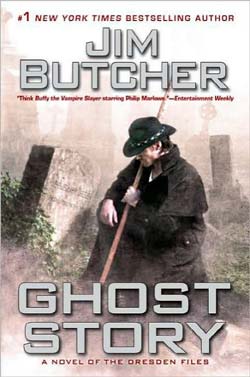
I’ll admit, I wasn’t sold on Jim Butcher’s Harry Dresden the first time we met. A co-worker was a fan of the first book, Storm Front, and it sounded like everything I usually like in a book, so I picked it up on her recommendation. I just couldn’t get in to the characters or the plot, even the setting, and I’m an Illinois native! I chalked it up to “one of those things” and didn’t look back until the audio version came around. The series had taken off by that point, and I’m a James Marsters fan, so I decided to give it another shot. The words of the book hadn’t changed, but the result was much different. Maybe I had changed since my first attempt with the book, but I thoroughly enjoyed it and resolved to pick up the next in the series. I am now completely hooked, not only on the audio performance, but the print as well.
Dresden is a Chicago wizard (listed in the phone book) who has a life that just won’t let up. Hard luck and tough breaks have followed him around since childhood, up to the point that now it’s hard to tell if he’s their victim or their creator. Sometimes, it’s a little of both. Because he has trouble paying bills and rent and feeding himself and his cat, he begins taking jobs from the Chicago police department when they come across something that is, shall we say, out of the ordinary. Mayhem ensues. The cast of characters ranges from humans, magical and non, to demons, fae, and vamps. There are the good and the evil, but most of the cast engage in “situational ethics.” As the series goes on, the situations get more frequent, the choices get harder as do the consequences. Yet, as dark as the series is at times, there is always humor to it.
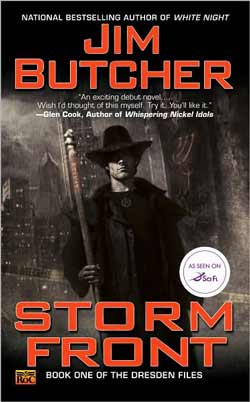
If it weren’t for the magic (okay, and the fae, and the vampires, and the werewolves…), these would fit very nicely into your mystery bookshelves. There is usually a grisly murder. The violence happens on screen, so if you’re blood and gore averse, these may not be for you. But, if you like twisty plots, carefully thought out world-building, sharply-written dialogue between characters who re-define “shades of gray,” then I urge you to give the series a try.
Robin Bradford is a lawyer, a librarian and, most importantly, a long time lover of words. You can check her out on twiter @tuphlos, or on the blogs Unpaged, Collection Reflection, or read the backlist at Obiter Dictum.
Summer Knight was the first of this series that I had picked up. I was hooked from there reading forwards and backwards! Thanks, Robin.
Robin, like you I read Storm Front and was okay with it, but not impressed. But someone said I should stick with it, and boy am I happy I did. The Dresden series is just getting better and better with each book, and it’s a rare author you can say that about. I am really excited for Ghost Story.
They were definitely sitting in the “mysteries only” bookstore that Kristi and I went into last week, so clearly you’re not the only one who thinks they belong.
I really need to get back into the series; I think I’m still in the middle of book 5 somewhere. Maybe I’ll see if I can catch some of them on audio.
I highly (highly highly) recommend them in audio.
I always liked how the whole magic thing plays second fiddle to the story. Was never huge on authors that rely on supernatural elements to be the story. Character and plot should come before any gimicks, regardless of genre.
Like everyone else has been saying the series is a lot of fun. Harry is a great, tortured, noir-ish, PI that just happens to live in a magic version of Chicago.
I’m really upset that James isn’t reading the new one on the audio. I already have it pre-ordered and was so looking forward to listening to it on the trip to Atalanta for Dragon-con in August. Now, I’m just sad.
I had problems reading the first one, but the audio just really did wonders for me and the series.
And my Border’s had the book out over the weekend- guess they weren’t too worried about release dates!
I just heard this today! I’m going to miss his reading too. I started reading it today, though, and I love it already.