
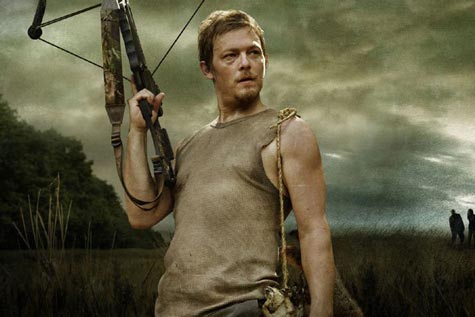
Daryl Dixon has become an unlikely hero and stand-out addition to The Walking Dead TV series. For a guy that never bathes, there are certainly a lot of women who’d like to throw themselves into his arms. And in many ways, he illustrates the power a fanbase has over entertainment today.
Just what makes Daryl so darn appealing? I’ll readily admit that out of the cast of characters, he’d be my number one choice for a survival partner. There’s his vast well of useful knowledge—Daryl grew up poor in a rural area, and often had to hunt for his own food, which is handy in a world without refrigeration. He’s the sort of tracker that would put Prince Humperdinck of The Princess Bride to shame, and no mean fighter, either. There’s the Harley, the jacket, and the antisocial air for those who enjoy a bad boy. Not to mention the crossbow, for those stealth shots in the nick of time.
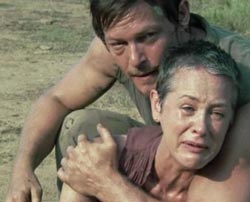
And we can’t ignore that beneath the gruff demeanor he frequently affects, Daryl has shown he has a caring heart. In the initial story arc of season 2, he was the most invested in finding the lost Sophia, and went out of his way to be kind to her grieving mother, Carol. A capable hard case with a heart of gold: what more could we want?
Okay, so you’ve watched the show. You’re familiar with Norman Reedus, the actor who plays Daryl. And you’re scoffing at my assessment. Don’t be quite so hasty; perhaps Reedus isn’t what you picture when you think “heartthrob,” but he has a very devoted legion of fans who would throw down with you over that.
From his indie films to the cult classic Boondock Saints, Reedus has always treated his fans well—and they’ve showered him with love in return. He’s a working actor; he may not be a household name, but he’s managed to consistently make a living in a cutthroat industry. And as is evidenced by his filmography, he likes to take meaty, controversial roles.
You can’t get much meatier than Daryl. At first glance he’s little more than an uneducated redneck. He hurls racial insults, shouts when offered emotional support, and doesn’t hesitate to rough someone up. But it’s all about the nuances. Reedus adds some rather subtle layers to Daryl that only deepen as the show progresses.
Watch him step into the farmhouse in the episode “Judge, Jury, and Executioner”: his hair is slicked back like a boy in church, his hunched shoulders make him physically smaller, he looks up hesitantly at the others as if afraid of what they think of him. Outside in the woods, in his domain, he practically swaggers and barks out his words—inside, in the presence of people that he considers his betters, he does everything he can to seem unthreatening.
This is what makes Daryl such an interesting character. One of the faults of The Walking Dead adaptation is that it’s somewhat lacking in complex characters. Most are reduced to mere caricatures or stereotypes: there’s the nerdy Asian boy, the loose cannon, the token black guy who only gets one line an episode (sorry, T-Dog).
But for my money, Daryl remains the most interesting guy in this bunch of frequently helpless survivors. And to think: he wasn’t even in the comics!
I was already a fan of Robert Kirkman’s series before AMC announced they would be producing the show. And I was more than excited when I sat down with my best friends and tuned in for the premiere. At first, it seemed the show would be incredibly faithful to the source material.
And then episode 3 aired, and there was Daryl, shooting zombies with his crossbow and getting into fights with Rick. I was pleasantly surprised. I’ve been a fan of Norman Reedus for years, and thought a brand new character would add an interesting element of surprise to the show.
Of course, it wasn’t long before the show writers made it clear that they weren’t going to stick exactly to the original comics. But Daryl is still an exciting blank slate, and with his addition the entire show could deviate in a radically new way.
At the beginning, he was intended to be just another supporting character whose skills would sometimes come in handy. But as the fans grew more vocal, demanding more and more screen time for Daryl, the writers began bumping him up to the forefront. The entire search for Sophia in season 2 can really be seen as an excuse to develop his character beyond a stereotypical redneck.
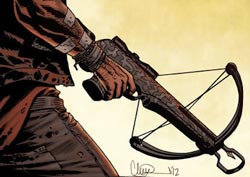 The fans aren’t just influencing the show, though, and here’s where the true power of the audience comes into play. Robert Kirkman, not only the series’ creator/writer but also an executive producer of the show, made an announcement preceding the season 2 finale: Daryl Dixon will be entering the comic series in the next run.
This is pretty damn impressive. It’s one thing for the fans to influence a television show, where it comes down to pleasing the audience in order to secure the big bucks. And it’s another thing entirely for them to influence a comic series that’s been established for nearly a decade. After all, a lot of the show’s fans have never read the comics; and many have no wish to, preferring to watch their zombie carnage rather than read it in a static graphic novel.
This cross-media impact is on the rise, and it could revolutionize the entertainment business. With sites like Twitter and Facebook interconnecting fans, celebrities, and creative teams, speaking out loudly can sometimes be enough. Today, the average viewer has a lot more say over what they consume than ever before.
Not to say that the character of Daryl Dixon, or even his human counterpart Norman Reedus, is a figurehead for a new revolution in entertainment. It’s simply that he’s yet another notch on the belt, another tiny victory for the ardent fans.
And for those of us who enjoy seeing a true survivor competently carve his way through the zombie apocalypse, he’s a breath of fresh air. There have been far too many useless people in the horror genre over the years, mere zombie bait for the gory payoffs. When we see Daryl ride in on his hog, crossbow loaded and ready, we know we’re in good hands.
Related: Is it inevitable we’ll see Daryl with Carol next season? Christopher Morgan has his opinions. Share yours!
Angie Barry wrote her thesis on the socio-political commentary in zombie films. Meeting George Romero is high on her bucket list, and she has spent hours putting together her zombie apocalypse survival plan. She also writes horror and fantasy in her spare time, and watches far too much Doctor Who. You can find her at Livejournal.com under the handle “zombres.”
Read all posts by Angie Barry on Criminal Element.
Holy crap that’s awesome.
Daryl IS the most interesting character on the show! Nice to see him (and Norman) getting the props they deserve! Great article!
“There have been far too many useless people in the horror genre over the years, mere zombie bait for the gory payoffs. When we see Daryl ride in on his hog, crossbow loaded and ready, we know we’re in good hands.”
I couldn’t have said it better myself. What a great article. Thank you!
Daryl is definitely the most intersting (And under the circumstances, intelligent) character on the show. He’s certainly not what you expect at first glance. You’re expecting him to be a ‘mini Merle’ but you also see from the beginning that a lot of what you think applies does not apply for example this constant insistence on calling him racist.
Politically incorrect yes, racist no. A racist would have gone off looking for his brother and made no effort to save the ‘chinaman’, and a racist from the deep south definitely would not have risked his own neck to save a black man. I love how Daryl challenges the politically correct ideas of what racism is or isn’t.
[b]the character is very interesting, but I think Norman is the one who makes it even more interesting. An intelligent, charming and handsome man, 3 ingredients infallible in one person.[/b]
Daryl’s character inspired the creator to make him part of the books, by my account this has never happend before. Can someone name off a character that appeared in television or movies that chaged the coarse of a written story? That actually manipulated the original? I can not think of a single one.
Harly Quinn recieved similar treatment. She was first created as a character for the 90s Batman animated series. Her popularity, but probably more her magnificient way of saying “Mr. Jay” and voice-actor, got her a spot in the comics.
Now if you had to come to blows between popularity between Harly and Daryl, then I believe you’d have a bit of a fight on your hands. Great post!
Great thesis. Daryl (Norman Reedus) is the most interesting and complex character of the show.
Daryl quickly became my favorite character on the show and this article spells out why perfectly.
“There have been far too many useless people in the horror genre over the years, mere zombie bait for the gory payoffs. When we see Daryl ride in on his hog, crossbow loaded and ready, we know we’re in good hands.”
YES. This is a guy you could actually see surviving the zombie apocalypse.
Of COURSE I’d stop watching the show right before a character like this came along (or at least got better developed). I’m more than a little tempted to dive back in… Great post!
I couldn’t agree more!
Norman Reedus who plays Daryl Dixon is featured on Lifestyle Mirror. You guys have to see it! Check it out here…
http://www.lifestylemirror.com/man/style/norman-reedus-gives-lifestyle-mirror-exclusive-tour-walking-dead-time-season-3-premiere/
Agreed. All of my sentiments were echoed in this article, I couldn’t have put it better.
You are spot on in your analysis about how fans of Daryl view him. He is a dream come true. He’s a strong (mentally and physically), take charge, great under pressure kind of man with a heart of gold and it doesn’t hurt that he is sexy as hell!!!
After much prodding by friends I decided to check out The Walking Dead(better late than never!). I became so engrossed that I’ve watched the whole series and am up to date in less than a week. I have definately jumped on the Daryl bandwagon and now believe that in the event of a zombie apocolypse all you really need is Daryl Dixon and his crossbow! When the series returns in Feb. Mrs. Andrea better put on her big girl panties and help him out, after all she owes him for that shot in the head!!
I really couldnt agree more!! I dont know what id do if they killed him off this show. None of the other characters interest me as much as Daryl does 🙂
He doesn’t ride a harley. He’s on a hard tailed triumph bonneville chopper. A british parallel twin. A far cry from even being mistaken for an american v twin of any kind
He doesn’t ride a harley. He’s on a hard tailed triumph bonneville chopper. A british parallel twin. A far cry from even being mistaken for an american v twin of any kind
Hi there! I am also a crazy as hell Dixon Brothers fan!!! Do you think you guys could possibly view, like and share? my Daryl Dixon themed comedy video, and let me know what you think? It has 12 likes and 0 dislikes so far, but still, would like it to become a hit if its worthy!
youtube.com/LetsPlayCatGaming
It’s on my channel and called “Would Straight Guys Go Gay For Daryl Dixon? | Norman Reedus: Babe Magnet | The Walking Dead (HD)
Thank you!!
Kurt hummel from Glee was also written for Chris Colfer, who plays him, now he is one of the leads and fan favorite, like Daryl