

Robert B. Parker’s latest Spenser novel, Sixkill, hits shelves and e-readers everywhere on May 3rd. Though Parker passed away unexpectedly last January, it may be premature to assume this will be the last time we see Spenser in action. I mean, Parker died last year and still released three books. For all we know, he may keep releasing new material for years, like some kind of pulp fiction Tupac Shakur.
(Breaking news: The estate has since announced plans for both the Jesse Stone and Spenser series to be continued posthumously by other writers, but that deserves its own post, doesn’t it? Stay tuned!)
Since no new Spenser books have yet been announced, this is a good opportunity to look back on the forty-entry series. Parker—who earned a PhD from Boston University with a doctoral thesis entitled “The Violent Hero, Wilderness Heritage and Urban Reality: A Study of the Private Eye in the Novels of Dashiell Hammett, Raymond Chandler, and Ross Macdonald”—was working as a literature professor at Northeastern University when he published his first Spenser novel, The Godwulf Manuscript, in 1973. He quit teaching as soon as he was able (his utter distain for academics is a running gag in his books) and devoted himself fulltime to 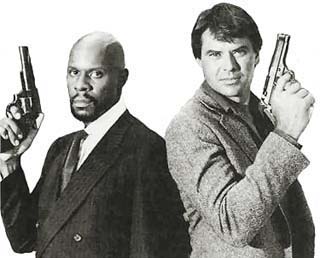 writing novels about Spenser, the Boston PI with quick fists and an even quicker wit. The series was a hit from the start and inspired a successful television show, a spin-off show, and a string of TV movies. From the start, Parker was a one-man pulp factory. For about twenty years, he released a book a year.
This period of steady efficiency lasted until 1997 when Parker decided to get serious. He introduced a second series, featuring police chief Jesse Stone. This was followed by a third series, featuring female PI Sunny Randall—followed by a Western series featuring cowboys Virgil Cole and Everett Hitch. All this in addition to one-offs like the YA novel The Boxer and the Spy and a set-your-watch-by-it annual Spenser novel. By 2006, Parker released three or four books a year. Sometimes it seemed like as soon as you put one down, Parker spit another one out.
They weren’t all great, of course. Nobody knocks out four books a year without cutting corners. Somewhere around 1999, Parker decided he could ditch description. Thereafter, characters and scenes were sketched rather than conveyed. This irked some readers who felt that Parker’s Hemingway-was-too-wordy approach to fiction had watered down its impact.
What seems to me inarguable, however, are Parker’s legacy and entertainment value. As far as legacy goes, it can be argued that he is the true heir of the Big Three. Reading Parker at his best naturally leads you to seek out Hammett, Chandler, and Macdonald (and, I think, Mosley and Grafton, as well). As for entertainment, I’ll just say it: there was never a more entertaining writer than Robert B. Parker. His prose flowed like a river. He wrote jokes better than any comedian, and his fight scenes were full-impact chess games. He rarely wrote plots that were worth remembering, but as Chandler once wrote, a good mystery is one where you don’t have to read the last page. Good pop-pulp is all about buzzing on a sugary high, turning pages for the sheer pleasure of seeing what comes next. Kurt Vonnegut said the writer’s first obligation was to be a good date to the reader, and there’s no better date than Spenser.
I’m something of a Spenser purist. I’ve dipped into Parker’s other books, but it’s the smartass private eye from Boston who’s my real hero. What I love about him is that he is the anti-Mike Hammer. Whereas Hammer is essentially a psychopath—the central emotional current of Hammer novels is gleeful sadism—Spenser is a hero, an ideal, and an inspirational figure: Parker’s perfect man. (If Hammer indulges masculine bloodlust, Spenser indulges a desire to achieve masculine perfection.) While I usually drift more toward the gritty noir stuff, occasionally you need a reason to think that people can do the right thing after all. For nearly forty years, Spenser showed up in bookstores to do just that. Long live Spenser.
Here are some notable cases over the course of Spenser’s long career:
The Godwulf Manuscript(1973): The first book. You can smell the Chandler influence on the pages, but Spenser’s already Spenser.
God Save the Child (1974): Parker once said that he felt the main difference between Chandler and himself was that whereas Chandler was a sad man, Parker was a happy man. That joy owed much to Parker’s beloved wife, Joan. Parker introduced her doppelganger, Susan Silverman, in this book.
Looking For Rachel Wallace (1980) – A hardboiled take on sexual politics. Tough guy Spenser is hired to protect a controversial feminist author. Complications ensue.
Early Autumn (1980) – Spenser kidnaps a young boy at the center of a violent custody battle and takes him to Maine to build a cabin. A coming of age story with Spenser as an ass-kicking spiritual mentor. In a better world, they’d assign this book to high school students instead of The Red Pony. Followed by a sequel, Pastime, in 1991.
A Catskill Eagle (1985) – Susan is abducted, and Hawk is in jail. Spenser sets out like an errant knight on a quest to make things right. He will get very tarnished in the process. A full-blown adventure novel.
The April Kyle Trilogy: Ceremony (1982), Taming a Sea-Horse (1986), Hundred-Dollar Baby (2006) – For my money, Spenser’s best outings where the three books involve his increasingly futile attempts to save a prostitute named April Kyle. Proof that Parker could write noir when he was of the mind.
For a comprehensive list of works Parker created and inspired, you can also visit The Thrilling Detective.
Jake Hinkson, The Night Editor
R.I.P. to a master of his arts. Can’t wait to see how the series(es) are continued!
My dad loves the Jesse Stone stories and the Tom Selleck TV shows based on the novels. I don’t think he’d be applauding the idea of somebody else continuing the books though. That never works out well. Bond was never the same after Ian Fleming. Nor Bourne after Ludlum. When you’re dead you’re dust. The spark that was Robert B Parker has gone. Anyone else would just be smoke and mirrors and whole lot less soul.
Just in case anyone else drops in here years later? Colin is dead right. While Wonderland producer a couple of perfect Spenser moments, the other attempts to follow up Parker have gradually decreased in quality to the point where I didn’t bother to read the latest outing. Trash by a Southern author who basically has re-written Spenser in a poor way.
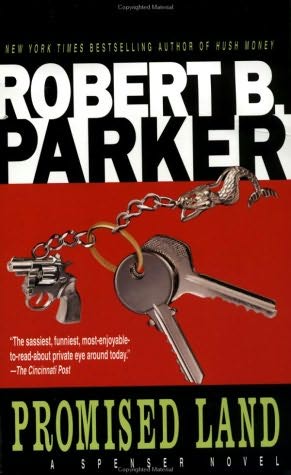
I came to read Parker and Spenser in his later efforts. I appreciated the accessibility of the prose, but lamented his lack of context and description. I wondered about his rep as a mystery writer. You have answered my questions. I have to read the earlier works to get a better idea about his writing. I am a Hammett and Chandler fan. I am starting on Ross MacDonald’s work. So the early Parkers will have to wait. But I am sure I will make it to the Promised Land in the near future. After all it did win an Edgar.
Dr. Lewis Preschel
1999. You’re right. That’s exactly when the change began. Great article!
It’s funny what you said about “Early Autumn” as that was my first Spenser book and I was in high school. I had started watching the TV show and wanted to try one of the books. The only one the library had in stock was “Early Autumn” and I’ve been hooked ever since. It was even the first Spenser book I gave my son to read. Thank you so much RBP.
I gave up on Spenser when I felt he was just recycling all the same things–Spenser’s relationship with Susan, the enjoyment of food, the lack of danger with what he was involved in. But when I did read him, I devoured him almost faster than he was able to write! Plus I did love the television series.
Love to get some more Parker quotes on his hero and primary role model, Raymond Chandler…There’s no shortage of third party quotes on the obvious similarities…But not a lot from Robert B. himself.
Calling Robert B. Parker a pulp writer is very insulting. Pulp is basically juvenile.
Thnaks for Shaering it