
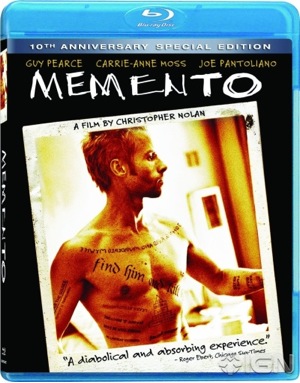
 This year marks the ten year anniversary of Christopher Nolan’s breakthrough second feature, Memento. In February, the film had a limited re-release in selected theaters as well as a new release on Blu-ray. Nolan’s film made a splash because it matched an original idea (a man with short-term memory loss hunts for his wife’s killer) with the inventive editing technique of telling the story backwards. But while Memento announced Nolan as a major new talent, it’s worth noting that “Amnesia Noir” has a long history.
In fact, plots about memory-loss go back to the beginning of classic noir. It seems like every third film of the era involved some variation on memory loss. By forcing their bewildered protagonists to stumble through complicated plots without the aid or comfort of memory, amnesia stories went right to the anxiety and confusion at the heart of the genre. Here’s a brief look at some of Memento’s forgetful forbearers.
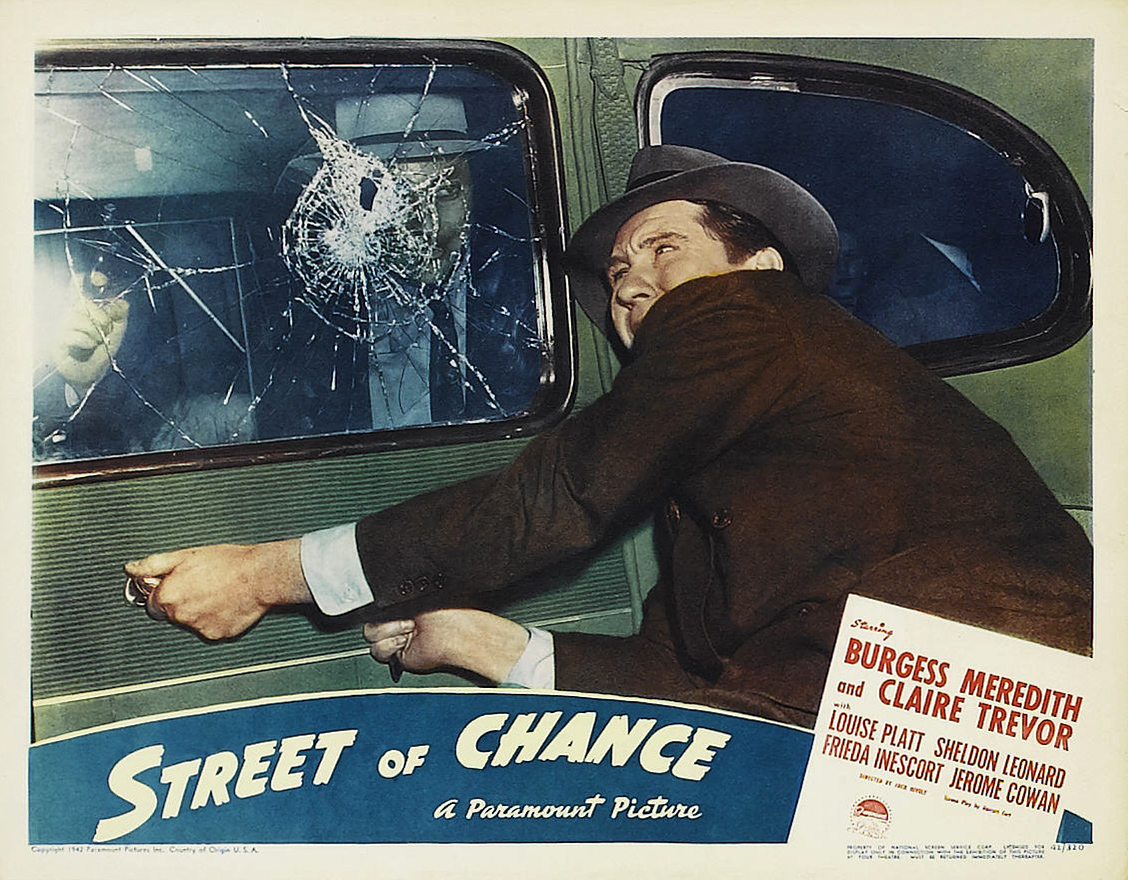
1. Street of Chance (1942)-One of the earliest noirs was this gritty little adaptation of the Cornell Woolrich novel The Black Curtain. It stars a young Burgess Meredith (thirty-four years before he hit it big in Rocky) as a man who awakens after an accident only to discover that he has been missing for a year from his home. Where has he been and why is he now wanted for murder? His search for answers leads him to sexy Claire Trevor. She knows everything, but she’s not telling. Hard to find but worth the search.
2. Spellbound (1945)-Early on in Alfred Hitchcock’s American career, the Master of Suspense made this thriller starring a young Gregory Peck as an amnesiac murder suspect and Ingrid Bergman as the valiant psychiatrist trying to help him find the real killer. Hitchcock warred with producer David O. Selznick over the script—Selznick insisted on a lot of expository psychobabble—so the results are a mixed bag. Still, the film is well worth seeing and features not-to-be-missed trippy dream sequences designed by Salvador Dalí.
3. Somewhere in the Night (1946)-A standard plotline in Amnesia Noir is the shell-shocked veteran who wakes up in a military hospital after a grenade blast with no memory and is sent back to the states to try and figure out his past. Invariably, he discovers that he was at the center of some criminal enterprise before he left for war. Starring John Hodiak (a frequent, if decidedly un-dynamic, noir performer) Somewhere in the Night doesn’t do a whole lot to distinguish itself from the competition, but it hits all the right notes. Available on DVD from Fox, make sure to check out the always-fantastic commentary by noir historian Eddie Muller for a further introduction to Amnesia Noir.
4. The Crooked Way (1949)-Another shell-shocked veteran, another hazy criminal past. Star John Payne may have started out as a pretty boy in musicals in the thirties, but when he switched to crime pictures in the late-forties he specialized in ass-kicking. He makes for a spunkier hero than Hodiak, and the film gives him plenty of opportunity to thump skulls. The movie also co-stars a psychotic Sonny Tufts and the always creepily entertaining Percy Helton.
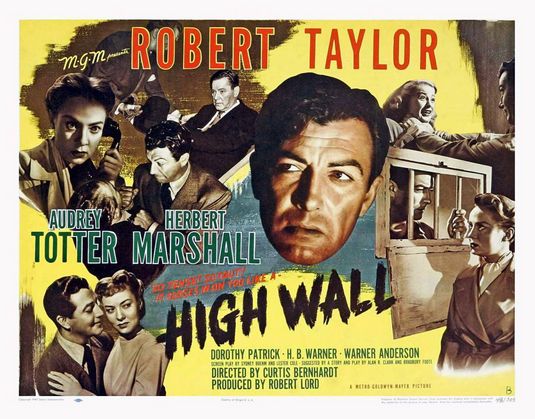
5. High Wall (1947)-Somewhat derivative of Spellbound—another sympathetic female psychiatrist aids another murder suspect who can’t remember if he’s guilty—but with a style and feel all its own. Noir goddess Audrey Totter, so often cast as the sexy bad girl, gets to play the heroine while Robert Taylor tries to remember if he murdered his wife or not. With superb cinematography from Paul Vogel, this one’s an overlooked little gem.
6. The Long Wait (1954)-Adapted from the novel by Mickey Spillane, this rough-and-tumble flick stars Anthony Quinn as a man who survives a car wreck only to find himself memory-free and at the center of a murder investigation. This one’s not great, frankly. The filmmakers would have been better off sticking closer to Spillane’s original plotline (which gave the main character more back story), but the film does have two secret weapons which make it worth seeing. One is cinematographer Franz Planer (99 River Street) whose work here is eerily beautiful—particularly a bizarre torture sequence toward the end. The other is Peggie Castle, a now-forgotten noir goddess who improved every movie she appeared in.
7. The Dark Past (1948)-What if the memory loss isn’t caused from a conk on the head but rather a long-repressed traumatic experience? William Holden stars as an escaped convict who takes psychiatrist Lee J. Cobb hostage in a secluded cabin. Cobb takes one look at Holden, diagnoses a troubled childhood, and embarks on a little memory recovery. Let the healing begin! The psychobabble drags, but director Rudolph Matè (D.O.A) piles on enough freaky dream sequences to make give Spellbound a run for its money.
8. Blackout Noirs-These are noirs where someone wakes up from a hard night of boozing, usually to discover that they somehow ruined their lives the night before (Cornell Woolrich loved this particular plot—probably, one suspects, because he lived it every morning). Examples of Blackout noirs include: Deadline at Dawn, Fall Guy, Night Without Sleep, and Black Angel.
9. A Double Life (1947)-An odd addition to the Blackout Noir sub-subgenre, this rare thriller from director George Cukor stars Ronald Coleman as an actor who becomes submerged in the lead role of a stage production of Othello and commits a murder while lost in the part. If you’re two people, how can you 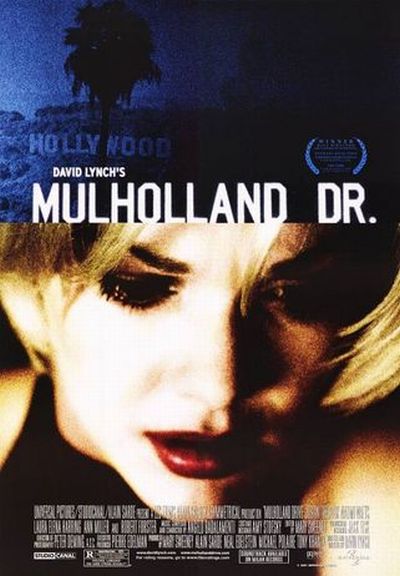 remember what the “other you” did last night? In the portrayal of an artist losing their mind to art, this film predates Black Swan but works the same emotional territory.
10. Mulholland Dr. (2001)-We should remember (ahem) that the same year Memento hit screens, David Lynch released this brilliantly twisted drama, replete with neo-noir touches including a protagonist who awakes in the first scene with no idea of who where she is. Lynch’s best work and a fine counterpoint to Memento's testosterone.
Jake Hinkson, The Night Editor
Memory finds solace and remembrance in the folds of forgetting to forget. I am a huge fan of ‘amnesia noir’ (and these beautiful vintage film posters)!
I have yet to see Memento. The year it came out, I had complications from surgery that resulted in huge patches of memory loss. Things I should have known as well as my own name were completely foreign, and big chunks of my life were just gone. Lots of people, not understanding quite how scary the whole situation was to LIVE, kept telling me that Memento was a great movie, but I couldn’t force myself to watch it.
I understand all too well why memory loss is a noir staple. It’s incredibly frightening. Now that most of my memory is back, I have Memento in my Netflix queue. I loved Mulholland Drive, and Spellbound is an old favorite, but I will have to see if I can get my hands (eyes) onto some of these others!
I just rewatched Memento, and was amazed at just how brilliant it was. I definitely have to put these on the queue–I only knew about Spellbound, and I love noir.
I think this list would make the Utimate Film Festival Weekend Not-to-Remember!
Fantastic piece, Jake.
I don’t know if it’s very noir, but Robert Ludlum’s “The Bourne Identity” had an amnesiac main character. I think it’s worth the mention, being his masterwork.
The Dark past is a remake of Blind Alley (1939), which was based on a play of the same name.
I’ve missed a few of these, Jake. Thanks.
I think there’s something intriguing about knowing as little as the main character during a story. Throw in memory loss and that just cranks up the tension. Discovering the twists and turns of a plot at the same time as the hero discovers himself is an added knife in the ribs. In the book, Jason Bourne and the reader learned of his past at the same time. That was changed in the movie, letting the viewer know who was chasing him and why before Bourne found out himself. Memento however got it right. That final twist was such a surprise it chilled me to the bone. I wish I could forget it and start afresh. Except then I probably wouldn’t be able to find the disc.
Really enjoyed this. Amnesia is usually treated as a puzzle to solve – like a detective mystery. MEMENTO’s achievement was capturing that feeling of continuing dislocation and mounting anxiety of not knowing what or who can be trusted – what is even going on. I’m not much of a David Lynch fan, but I thought MULHOLLAND DRIVE was brilliant when I saw it. Actually giggled with delight as I watched some of the key scenes – not always the most welcome reaction in a crowded theater…
ANGEL HEART could be on this list, yes it has supernatural overtones, but the base of the story a man solving a murder and looking for the long missing Johnny Favourite while discover his dark past he couldn’t remember.
Good list, through out.
I am such a FAN of Angel Heart, and I thought of it, too.
Ito ang pagkakataon kung saan dapat kuminang ang Titan Gel, sapagka’t dapat makabuluhang nagbubunsod ang mga ito sa iyong mga resulta kapag pinagsama sa pisikal na traction. Sa totoo lang, ipinakita ng ilang mga pag-aaral na kapag gumagamit ng panlalaking mga suplemento sa pagpapahusay kasama ang traction, maaari kang magtamo ng anim na buwang paglago sa kasing liit ng tatlong buwan. titangel-in-philippines.com Ang mga aparato na kung saan idinesenyo upang mapahusay ang sekswal na pagpukaw at pagpapalaki ng titiay ay parehong mapanganib na “aparatong kagamitan”. Ang pagkilos nila ay batay sa tiyak na makipot na dugo sa titi para gawin ang pagtitipon ng dugo sa pagkalungga na mga katawan.
Thnaks for Shaering it
Want to thank you for this great post!!
I definitely enjoied every bit of it, I have you bookmarked to check out new stuff you post.
Meanwhile, check out this free classified ads site: anunturili.ro